
- Caravan Fire Safety
- Fire Risks Inside a Caravan
- How to Reduce the Risk of Fire in a Caravan
- Essential Fire Safety Equipment for Caravans
- Tips to Prevent Fires While Living in a Caravan
- Are We Prepared for a Caravan Fire?
- Choosing the Best Fire Extinguisher for a Caravan
- Types of Fire Extinguishers
- How to Use a Fire Extinguisher
- How to Use a Fire Blanket
- Fire Detection Systems for Caravans
Caravan Fire Safety: What Every Vanlifer Should Know
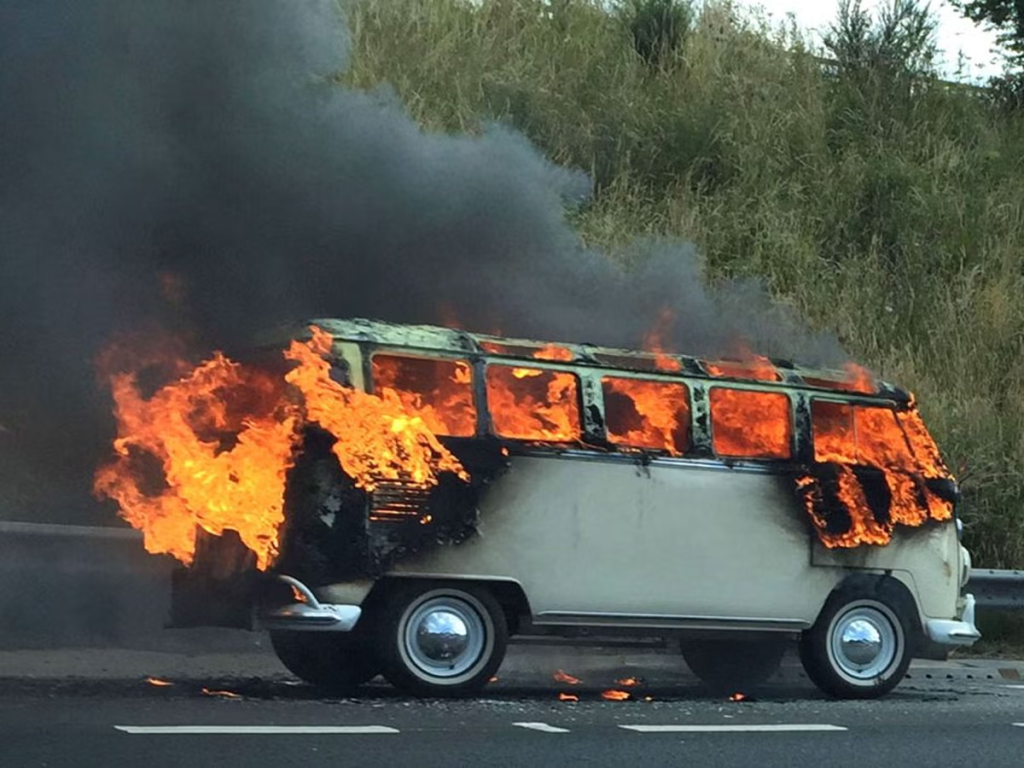
Seeing the words caravan and fire together sounds terrifying, doesn’t it? Fire itself is already frightening, but imagining a fire inside a caravan — especially while you are inside it — is something I honestly don’t even want to think about.
Hopefully we will never face such a situation. But if it ever happens, either to us or to a nearby caravan neighbor, it’s important to know what we can do and what equipment we should have. That’s exactly why I prepared this article.
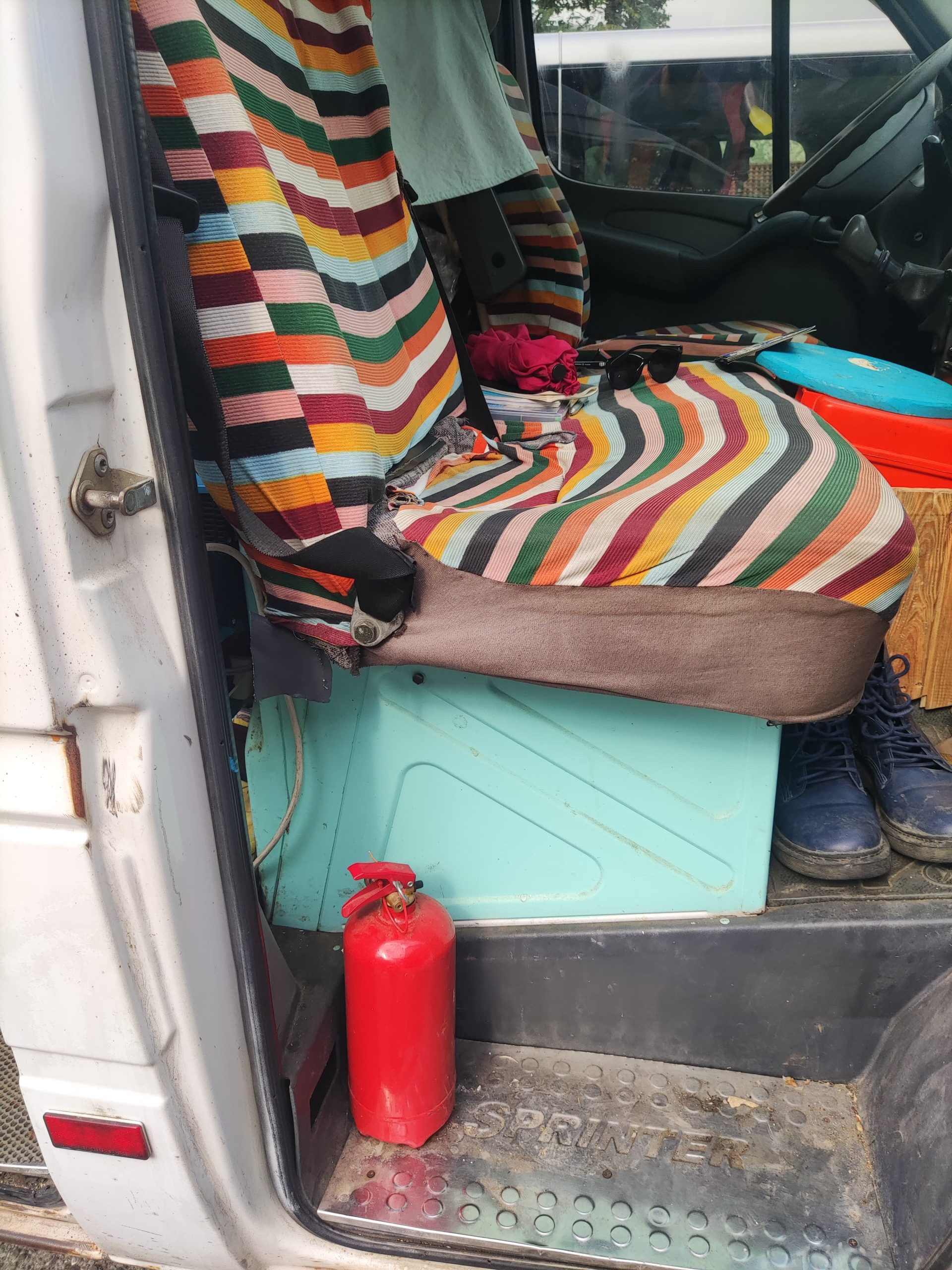
Including myself, I believe many caravan owners are not truly prepared for a fire. A basic fire extinguisher is usually carried in the vehicle, but in most cases it’s there simply to pass inspection requirements rather than for real safety preparedness.
Fire Risks Inside a Caravan
There are several potential causes of fire inside a caravan. Some of the most common ones include:
- Pressurized containers (deodorant, shaving foam, etc.) stored in cabinets close to heat sources such as ovens or heaters
- Incorrectly fused 12V or 220V electrical wiring
- Cables crushed by items carelessly loaded into cupboards
- Clothes left to dry next to heaters
- Curtains or blinds placed too close to heaters or cooking appliances
- Using crocodile clips instead of proper clamps on battery terminals
- Unsafe electrical wiring practices
- Running multiple high-power devices from a single power strip


How to Reduce the Risk of Fire in a Caravan
To minimize the chances of a fire starting inside your caravan, consider the following precautions:
- Choose fire-resistant fabrics
- Use flame-retardant upholstery and furniture coverings
- Ensure all electrical wiring is done correctly and safely
- Always respect minimum cable thickness requirements
- Use high-quality electrical cables and components
- Avoid plugging multiple high-power devices into the same power strip
- Install mini fuses on the positive terminals of electrical equipment
- Use quality electrical equipment
- Use midi fuses on high-current cables
- Install a proper fuse box instead of random inline fuses
- Keep flammable materials away from the stove or heater
Even if you take every precaution, the caravan parked next to you might still be a potential fire risk. And let’s not forget where we are — in many places someone will eventually park right next to you no matter how far away you try to stay.
It reminds me of men’s restrooms — even when every urinal is empty, someone always comes and stands right next to you. If you ever find an academic study explaining this phenomenon, please send me the link. 🙂


Essential Fire Safety Equipment for Caravans
To be better prepared for a fire, you should consider carrying the following equipment in your caravan:
- Fire extinguisher (2 kg or 5 kg)
- Fire blanket
- Fire extinguishing ball
- Detection systems
- Smoke alarm
- Gas alarm
- Carbon monoxide alarm
- Modern fire suppression devices
⚠️ One important thing to remember:
If a vehicle catches fire, the cause no longer matters.
If your caravan is burning, leave immediately and move as far away from the vehicle as possible.
Tips to Prevent Fires While Living in a Caravan
Here are some practical fire-prevention tips:
- Never leave cooking pans unattended
- Clean grease and oil spills immediately
- Never block ventilation openings
- Turn off all devices before going to sleep
- Do not use a stove or heater while the vehicle is moving
Sometimes a fire simply cannot be stopped. That’s why you should always have an escape plan, and everyone inside the caravan should know exactly what to do in an emergency.
Keep vehicle keys close to the exit, and having a window breaker tool nearby can also be extremely helpful.
Are We Prepared for a Caravan Fire?
Fire Extinguisher
Always keep a working fire extinguisher inside your caravan. Check its expiration date regularly and replace it when necessary.
Make sure you choose the correct type of extinguisher, because different fires require different extinguishing agents.
For example:
- Electrical fires
- Wood or solid material fires
may require different extinguishers.
No Smoking Inside
Avoid smoking inside the caravan and never keep open flames, candles, or similar ignition sources nearby.
Gas Leak Checks
If your caravan uses gas, regularly inspect the system for gas leaks and always make sure the gas valve is closed when not in use.
Electrical System
Inspect the caravan’s electrical system regularly and fix any loose cables or short-circuit risks immediately.
Install Fire Detectors
Install a fire detector and test it regularly.
Choose Your Camping Spot Carefully
Avoid parking your caravan near dry grass or bushes, especially during summer.
Wind can also spread fire quickly, so be mindful of your surroundings.
Emergency Exit Routes
Make sure everyone knows the emergency exit routes.
Remember: an electrically operated door might fail during a short circuit.
Emergency Plan
Create a clear emergency fire plan and make sure everyone traveling with you knows it.
Communication
Always keep communication tools like a mobile phone nearby so you can call for help quickly.
Choosing the Best Fire Extinguisher for a Caravan
ABC Fire Extinguishers
For caravans, the ABC type fire extinguisher is generally the best option.
It can handle:
- Class A fires – solid materials (wood, paper, fabric)
- Class B fires – flammable liquids and oils
- Class C fires – electrical equipment
This makes it a versatile and widely recommended option.
Size
Choose a fire extinguisher appropriate for your caravan’s size.
- 1 kg to 2 kg extinguishers are common for caravans
- Larger extinguishers provide more protection
Personally, I keep a 5 kg foam (AB) extinguisher inside the caravan and two 2 kg ABC extinguishers near the front doors.
Accessibility
A fire extinguisher should always be easy to reach and quick to deploy.
In an emergency, you might not be able to reach every extinguisher.
Maintenance
Check regularly whether the extinguisher requires maintenance or replacement.
Certifications
Ensure the extinguisher complies with local safety standards and certifications.
Ease of Use
Make sure you know how to operate it quickly, and if it is mounted somewhere, ensure it can be removed easily.
Price
Price should not be the main factor. Reliability and effectiveness are far more important.
Types of Fire Extinguishers
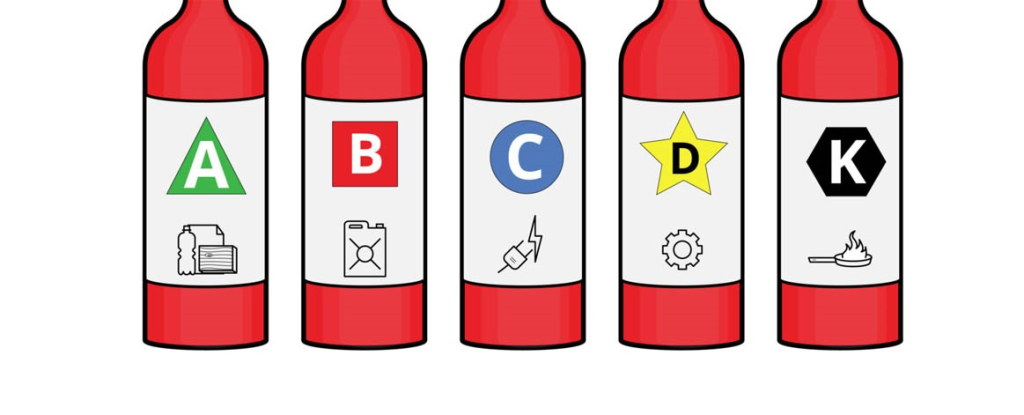
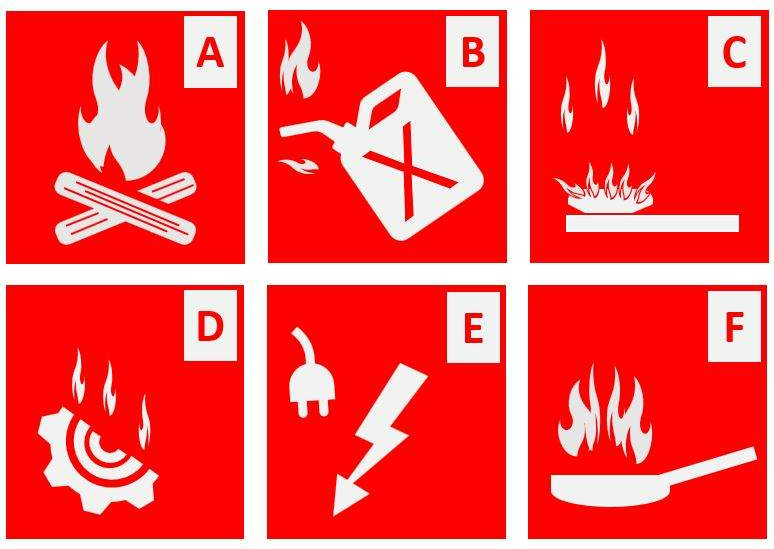
Fire extinguishers are designed for different types of fires.
ABC Fire Extinguishers
Used for:
- Solid materials (Class A)
- Liquids and oils (Class B)
- Electrical equipment (Class C)
BC Fire Extinguishers
Used for:
- Liquid fires
- Electrical fires
Class A Fire Extinguishers
Used for:
- Wood
- Paper
- Textiles
Class K Fire Extinguishers
Designed for kitchen fires involving oils and grease.
Class D Fire Extinguishers
Used for metal fires, typically found in industrial environments.
Class F Fire Extinguishers
Used for high-temperature cooking oil fires, often in commercial kitchens.
How to Use a Fire Extinguisher
- Check that the extinguisher is ready and within its expiration date.
- Carry the extinguisher toward the fire source.
- Pull the safety pin.
- Aim the nozzle at the base of the flames.
- Squeeze the handle to release the extinguishing agent.
- Sweep the spray slowly across the fire.
- Stay at a safe distance.
- After the fire appears extinguished, wait a few minutes to ensure it does not reignite.
- Call emergency services or the fire department even if the fire seems under control.
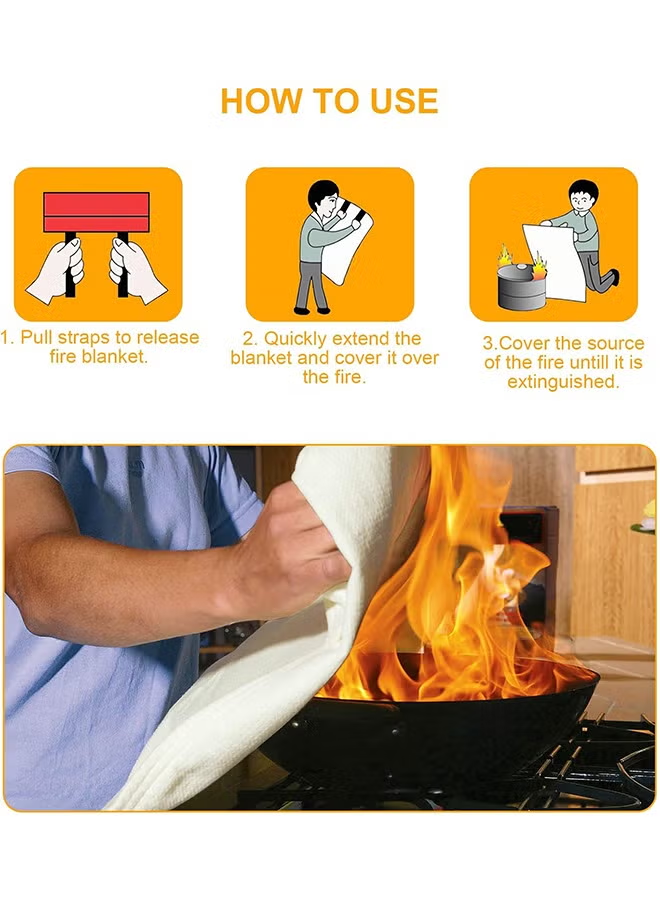
How to Use a Fire Blanket
A fire blanket works by cutting off oxygen from the flames.
Steps:
- Evaluate the fire size first. If it is large, call emergency services immediately.
- Check the label to ensure the blanket is suitable.
- Place the blanket over the flames carefully.
- Press it down to completely cover the fire.
- Leave it in place for several minutes until everything cools.

Fire Detection Systems for Caravans
Smoke Detectors
Ionization Smoke Detectors
These detectors use ionized air particles to detect smoke. When smoke enters the chamber, the electrical current changes and triggers the alarm.
Optical Smoke Detectors
These use a light beam and sensor. Smoke particles interrupt the light beam and trigger the alarm.
Smoke detectors help identify fires in their early stages, allowing faster response.
Gas Detectors
Gas detectors detect dangerous gases such as:
- Carbon monoxide (CO)
- Methane (CH₄)
- Hydrogen sulfide (H₂S)
- Oxygen imbalance
They trigger audible or visual alarms when gas concentrations reach dangerous levels.
Carbon Monoxide Alarms
Carbon monoxide alarms continuously monitor CO levels in the air.
When CO concentration exceeds safe limits, the alarm triggers a loud warning.
These devices can also warn users about:
- Low battery
- Sensor malfunction
Carbon monoxide is colorless and odorless, which makes CO alarms essential safety equipment in caravans.