

Why a Good Flyscreen Matters in a Campervan
One of my favourite things about travelling in a campervan is being able to park somewhere nice, open the doors and remove the barrier between the inside and outside. Especially in hot weather, having fresh air moving through the van makes spending time inside much more enjoyable. It almost feels like the van has gained a few extra square metres.
But there is one small problem: flies!
Leaving the door open on a summer evening while sitting inside sounds great until a few mosquitoes, flies or other flying insects find their way in. Then you end up having to close everything, which takes away one of the best parts of vanlife. In Australia, especially during summer, even going for a hike can sometimes be challenging because of the number of flies.
Opening the windows isn’t always enough either. So it’s not surprising that after spending enough time in a campervan, you eventually start looking for a good flyscreen solution.

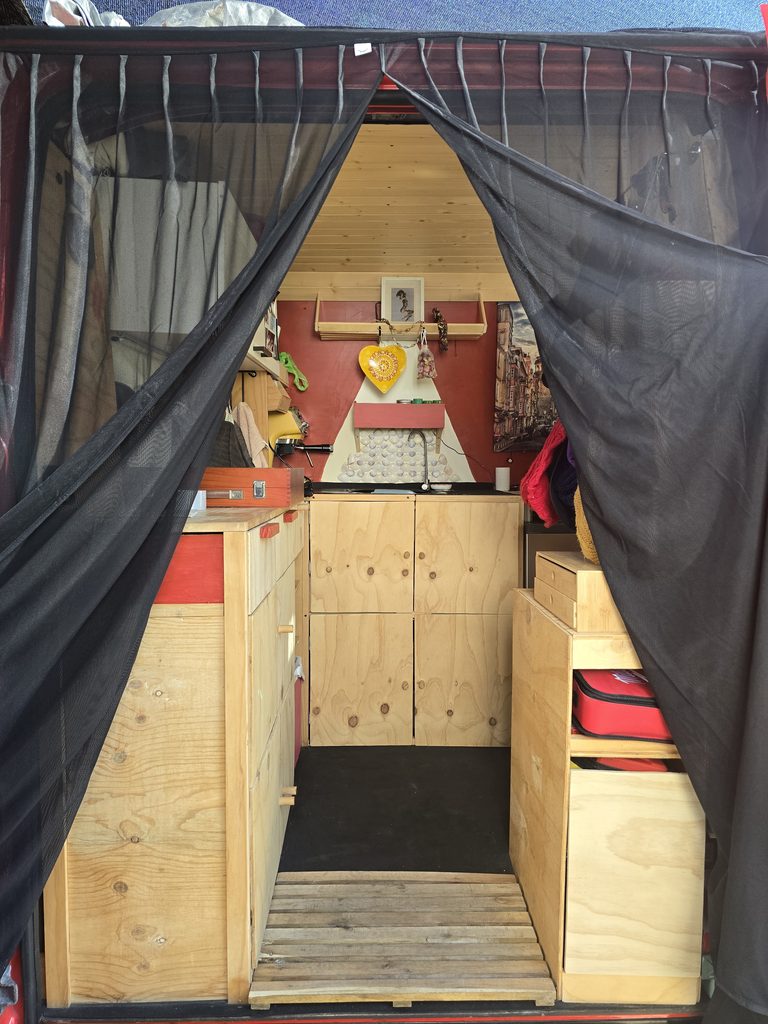
Why is a flyscreen so useful in a campervan?
Flyscreens are something we’re already used to having at home. In a campervan, they become even more important because your entire living space is only a few square metres.
On a warm evening, being able to leave the door open while cooking, working on the computer or simply sitting inside and enjoying the view makes a big difference. It also helps get cooking smells and moisture out of the van. Since it’s such a small space, the air quality can deteriorate quite quickly, and sometimes opening the doors is unavoidable just to get some fresh air in.
For me, one of the biggest advantages is being able to keep the flies out without having to keep the door closed.
Especially when you’re staying somewhere in nature or near the coast for a few days, being able to leave the door open and still sit comfortably inside changes the way you use the van.
Living in a Bubble magnetic flyscreen
While looking for a flyscreen for our campervan, one of the solutions I came across was the magnetic flyscreen from Living in a Bubble.
The nice thing about the system is how simple it is. The flyscreen attaches around the door using magnets and doesn’t require a permanent installation. There is no need to drill holes, use screws or permanently modify the van.
When you don’t need the flyscreen, you can simply remove it, fold it up and store it in its bag. When you need it again, putting it back on takes only a few minutes.
Being able to use the door normally is important
One of the things I pay attention to with flyscreens is how easy it is to get in and out of the van.
The Living in a Bubble model for the side door has a magnetic opening in the middle. You don’t have to remove the entire flyscreen every time you want to go through the door. Once you pass through, the magnets come back together and close the opening. They even catch and lock onto each other automatically.
It might seem like a small detail, but it makes a real difference in everyday use. If you’re getting in and out of your campervan several times a day, having to deal with the flyscreen every single time would quickly become annoying.

It’s not just about keeping insects out
Another advantage of a flyscreen is ventilation.
When all the doors and windows of a campervan are closed, the inside can heat up very quickly, especially when the van has been sitting in the sun. Leaving the door open with a flyscreen allows much more air to flow through the van.
Living in a Bubble flyscreens are also designed to provide some shade and privacy, rather than simply being an insect mesh. The mesh has approximately 1 mm openings and doesn’t completely block your view.
This is useful when you want to leave the door open during the day without having the entire inside of the van exposed. I use the black version, and from outside you can’t see much of what’s inside, while from the inside you can still see outside quite easily.
No tools needed for installation
The Living in a Bubble flyscreens are also practical when it comes to installation. Depending on the construction of your vehicle, they can be installed on the inside metal surfaces, between the rubber door seal and the body, or on the outside metal surface.
If there are plastic or wooden areas around the door where there is no metal, additional metal pieces supplied with the product can also be used.

Which size should you choose?
It’s important to measure your door opening before ordering.
Living in a Bubble offers standard and large sizes for different vehicles. For example, the standard side-door model is 160 × 130 cm, while the large version is 210 × 150 cm. There are also standard and large options available for rear doors. We chose the large version for our Renault Master.
Even if your vehicle isn’t specifically listed, you can measure the door opening and compare it with the product dimensions. This is particularly useful for campervans that have been converted from different types of vans.
You can check out the campervan flyscreen range from Living in a Bubble here. Just check the measurements for your vehicle to find the right option for the side door, rear door or other openings.
If you spend a lot of time travelling in a campervan, especially in warmer climates, a good flyscreen can quickly become more than just a small accessory. It becomes part of everyday vanlife.